10 B2B Lead Generation Examples You Can Actually Use

By Mriganka Bhuyan
•Founder at Munch
Tired of reading the same old lead generation advice? The kind that tells you to "build relationships" and "provide value" without showing you how? Us too. It's like a fitness coach telling you to "get in shape" and then walking away.
This isn't an article full of abstract theories. It's a playbook. We're breaking down 10 specific, field-tested B2B lead generation examples that you can steal and implement. No fluff, no "synergies," just the nuts and bolts of what works to fill a pipeline.
For each play, you get the recipe:
-
The Buying Signal: The exact trigger event or data point to look for.
-
The Outreach Template: A no-BS message you can adapt and send.
-
The Workflow: The step-by-step process for finding the lead and launching the campaign.
We're showing you how to do it. You'll get the tactical details to replicate these strategies for your own outbound efforts, from finding contacts to crafting the message.
We’ll also point out where specific tools can shortcut the grunt work. Manual research and data enrichment are a soul-crushing time suck. A platform like Munch can automate much of this, turning a multi-hour research project into a few clicks. The goal is simple: a collection of actionable lead generation examples you can put to work today. Forget the theory. Let's get to the plays.
1. Content Marketing & Lead Magnets
Think of this as the "free sample" strategy, but for the digital age. Instead of a tiny scoop of ice cream, you're offering a piece of knowledge: an ebook, a checklist, a webinar, or a killer template. To get this asset, your prospect trades their contact information. It's a fair exchange that positions you as a helpful expert, not just another company blasting out sales pitches. This is one of the foundational lead generation examples for a reason: it works.
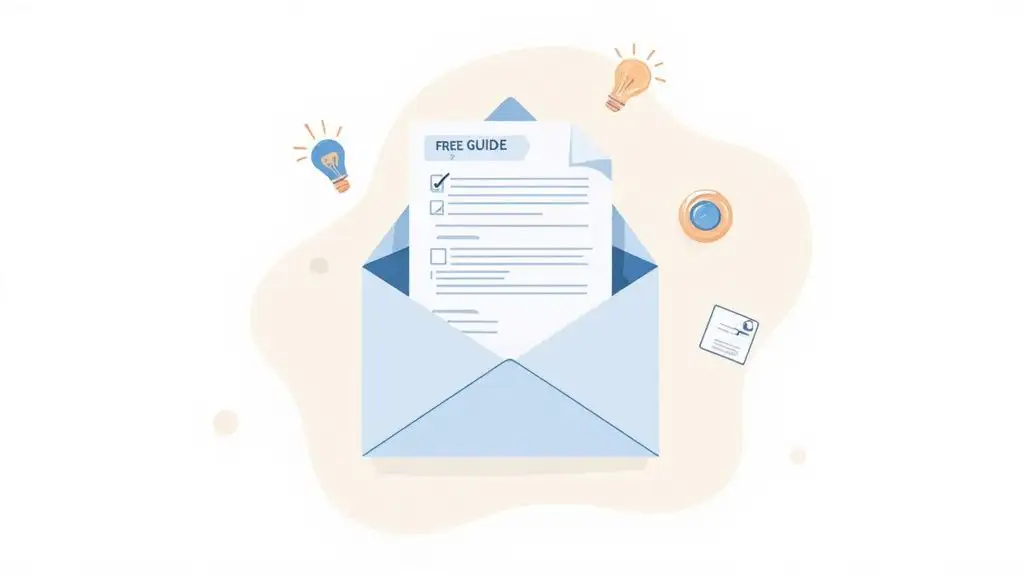
This method, popularized by companies like HubSpot and their inbound marketing philosophy, is about attraction. You create content so good that your ideal customers come to you. The key is solving a real, specific problem. No one is signing up for a generic "Guide to Business." They are signing up for "The 5-Step Checklist to Triple Your Cold Email Reply Rates This Quarter."
The Strategic Breakdown
The magic isn't just in the content, but in the entire process. A well-designed landing page with a compelling headline and a short sign-up form is non-negotiable. You want to make the "yes" as easy as possible. Then, the delivery must be instant. Nothing kills momentum like waiting 24 hours for a PDF that should have been an automated email reply.
-
Buying Signal: A download signals clear intent. Someone who grabs your "Ultimate SEO Template for B2B SaaS" is telling you they have a specific need right now.
-
Workflow:
-
Create: Develop a high-value asset solving one specific problem.
-
Gate: Put it behind a simple form on a dedicated landing page.
-
Promote: Share the landing page on social media, in newsletters, and through targeted ads.
-
Nurture: Once you have the lead, enter them into an automated email sequence that provides more value and introduces your solution.
-
-
KPIs: Conversion Rate (downloads/visitors), Cost Per Lead (CPL), Lead-to-Customer Conversion Rate.
2. Landing Page Optimization
A landing page is a digital velvet rope. It's a single web page designed for one thing: to convert a visitor into a lead. There are no distracting navigation bars, no links to your "About Us" page, and certainly no blog feed. It's a clean, direct path from "I'm curious" to "Here's my email address." This is a foundational lead generation example because it isolates the call-to-action, eliminating choice paralysis for the user.
This method was refined by companies like Unbounce and Leadpages. They built platforms on the truth that your homepage is a terrible place to send ad traffic. A visitor needs a custom experience tailored to the specific ad they clicked. Slack's signup page doesn't waste time explaining the history of workplace communication; it gets straight to the benefit and the sign-up form.
The Strategic Breakdown
The power of a landing page is in its simplicity and focus. Every element, from the headline to the color of the "Submit" button, is engineered to persuade the visitor to complete a single action. It's the ultimate test of your offer's clarity and appeal. The goal is to make the decision so easy and the value so obvious that filling out the form feels like the next logical step.
-
Buying Signal: A form submission on a high-intent landing page (like a "Request a Demo" or "Get Pricing" page) is one of the strongest buying signals you can get. They're actively raising their hand.
-
Workflow:
-
Define: Identify a single offer and a target audience segment.
-
Build: Create a dedicated landing page with a benefit-driven headline, concise copy, a short form, and a powerful Call-to-Action (CTA).
-
Drive: Direct targeted traffic from ads, emails, or social posts to this page.
-
Test: A/B test elements like headlines, images, and CTA text to continually improve the conversion rate. This is where you separate good from great. Learn more about how this fits into your overall strategy in our guide to the B2B marketing funnel.
-
-
KPIs: Conversion Rate, Cost Per Lead (CPL), Bounce Rate.
3. Email Marketing Campaigns
Email is the workhorse of digital communication, the internet's cockroach that refuses to die. Why? Because it works. A well-crafted email campaign lands directly in your prospect's personal digital space, offering a direct line of communication that social media can't match. It’s not about spamming inboxes; it's about delivering targeted value that makes someone happy to see your name pop up. This is one of the most versatile lead generation examples available.
Done right, email marketing is an engine for building relationships at scale. Companies like Reforge have mastered this, using educational sequences that provide so much value you forget you're being marketed to. The goal is to become a welcome guest in the inbox, not an uninvited pest. You achieve this through relevance and personalization.
The Strategic Breakdown
The real power of email isn't just sending a message; it's the automation and segmentation that turn a broadcast into a conversation. You can guide a new lead from curious prospect to paying customer without lifting a finger after the initial setup. The key is sending the right message to the right person at the right time. That means segmenting your lists and personalizing your content beyond a {{first_name}} tag.
-
Buying Signal: A click-through on a specific link, a reply to a nurture email, or repeated opens of emails on a certain topic all signal strong interest. Someone who keeps clicking on your case studies about "improving email deliverability" is waving a big flag.
-
Workflow:
-
Segment: Group your audience based on behavior, firmographics, or their original sign-up source.
-
Personalize: Craft messages that speak directly to the pain points of each segment.
-
Automate: Set up triggered email sequences for new subscribers, abandoned carts, or specific actions.
-
Analyze & Optimize: Track open rates, click-through rates, and reply rates to improve your campaigns. You can find more tips on how to improve your email deliverability to make sure your messages even arrive.
-
-
KPIs: Open Rate, Click-Through Rate (CTR), Reply Rate, Unsubscribe Rate, Lead-to-Customer Conversion Rate.
Pro Tip: Use Munch to research your lead's LinkedIn posts and craft relevant and personalized outreach messages!
4. Social Media Lead Generation
This is the digital equivalent of networking at the world's biggest cocktail party, where everyone's interests and job titles are on public display. Instead of awkwardly handing out business cards, you're sliding into DMs, running targeted ads, and engaging in communities where your ideal customers already hang out. It's about meeting people where they are, whether that's on a professional network like LinkedIn or a visual platform like Instagram. This is one of the most dynamic lead generation examples because the platforms and tactics constantly change.
The goal is to stop the scroll. You can do this by offering genuine value in organic posts, building a community, or using ad platforms like Facebook Lead Ads that capture information without the user ever leaving the app. The key is to blend in naturally. You want to be the helpful expert in the comments section, not the person shouting through a megaphone in the middle of a quiet library.
The Strategic Breakdown
The beauty of social media is the sheer volume of data. You can target users based on their job title, company, interests, recent life events, and even online behavior. This allows for specific campaigns that speak directly to a prospect's needs. A well-placed LinkedIn Sales Navigator search or a cleverly targeted Facebook ad can feel less like an advertisement and more like a solution to a problem they were just thinking about.
-
Buying Signal: A user engaging with competitor content, joining industry-specific groups, or asking questions related to your field are all flashing neon signs of intent. A change in their job title on LinkedIn is another classic trigger.
-
Workflow:
-
Identify: Pinpoint the platforms where your ideal customers are most active.
-
Engage: Participate organically by commenting, sharing valuable content, and answering questions.
-
Target: Run paid campaigns using platform-native lead forms, targeting users by demographics, interests, and behaviors.
-
Connect: Follow up immediately and personally. A lead from social media goes cold faster than a forgotten cup of coffee.
-
-
KPIs: Cost Per Lead (CPL), Click-Through Rate (CTR), Lead Form Conversion Rate, Engagement Rate.
5. Webinars and Virtual Events
This is the digital equivalent of hosting a can't-miss industry conference, but without the questionable hotel breakfast buffet. You offer an exclusive live training, a panel with industry titans, or a product deep-dive. In exchange for this front-row seat to expertise, your audience registers with their contact information. It's an appointment-based lead generation strategy that builds authority and creates a direct, interactive channel with potential customers.

Pioneered by platforms like GoToWebinar and supercharged by Zoom, this approach is about creating a moment. It's an event. The magic lies in the live interaction and the perceived value of timely, expert-led content. A good webinar doesn't just present information; it answers questions, runs live polls, and fosters a sense of community. The leads you generate aren't just names on a list; they're people who have dedicated an hour of their day to hear what you have to say.
The Strategic Breakdown
Success hinges on promotion and follow-up. A compelling topic is the start, but getting people to show up requires a multi-touch promotional plan. Then, the real work begins after the event. The follow-up strategy separates the pros from the amateurs, turning engaged attendees into sales conversations.
-
Buying Signal: Registering for and attending a webinar on a specific topic (e.g., "Advanced LinkedIn Ad Targeting") is a massive signal of active interest and a current business need. They are actively seeking a solution.
-
Workflow:
-
Topic: Choose a hyper-specific, problem-oriented topic.
-
Promote: Announce the event 3-4 weeks out via email, social media, and partner channels. Send reminder emails.
-
Execute: Host a high-energy, value-packed live event with a clear call-to-action.
-
Follow Up: Within 24 hours, send the recording to all registrants and a tailored follow-up to attendees, segmenting based on engagement. This process is key for learning how to qualify sales leads effectively.
-
-
KPIs: Registration Rate, Attendee Rate (Show-Up Rate), Attendee Engagement Score, MQLs Generated.
6. SEO and Organic Search
This is the long game, the digital equivalent of setting up shop on the busiest street in town. Instead of chasing customers, you make it incredibly easy for them to find you when they're already looking. By optimizing your website for search engines, you attract high-intent prospects who are actively typing their problems into Google. It's one of the most powerful lead generation examples because the leads come to you pre-qualified by their own curiosity.
This strategy isn't about quick wins; it's about building a sustainable asset. Companies like Ahrefs and Backlinko have built empires not just by selling SEO tools, but by mastering SEO themselves. They create comprehensive, authoritative content that answers every conceivable question about a topic, earning them top spots on Google and a constant stream of organic traffic. They don't just talk the talk; their search rankings are the walk.
The Strategic Breakdown
The goal is to become the default answer for questions your ideal customers ask. This requires a mix of technical site health, content that genuinely helps, and authority earned through backlinks. You're not just creating a blog post; you're building a resource so valuable that Google has no choice but to show it to people. And once they're on your site, you need to understand their journey. A great starting point is learning how to track website visitors to see what content resonates.
-
Buying Signal: A person searching for "best accounting software for small businesses" is not just browsing; they have a problem and are actively looking for a credit card-worthy solution.
-
Workflow:
-
Research: Identify high-intent, long-tail keywords your prospects are searching for.
-
Create: Develop best-in-class content (guides, articles, tools) that thoroughly answers the search query.
-
Optimize: Ensure your site is technically sound (fast, mobile-friendly) and content is optimized for on-page SEO.
-
Promote: Build high-quality backlinks from relevant, authoritative sites to build your domain's credibility.
-
Convert: Use clear calls-to-action (CTAs) within the content to guide visitors toward becoming a lead (e.g., demo request, free trial).
-
-
KPIs: Organic Traffic, Keyword Rankings, Click-Through Rate (CTR), On-Page Conversion Rate.
7. Referral Programs and Word-of-Mouth
This is the ultimate "get your friends to join the party" strategy. You turn your happiest customers into your most effective sales team by giving them a reason to spread the word. Instead of shouting into the void with cold ads, you're getting a warm introduction from a trusted source. It’s one of the most powerful lead generation examples because it leverages the single most valuable marketing asset: trust.
This approach was famously supercharged by companies like Dropbox, which built its empire by offering free extra storage to both the referrer and the new user. It’s a beautifully simple, two-sided incentive that feels less like a marketing scheme and more like a helpful tip from a friend. The leads that come through are pre-qualified and arrive with a positive impression already in place.
The Strategic Breakdown
A successful referral program isn't just a "Refer a Friend" button on your site; it's a frictionless, rewarding experience. The process has to be dead simple for the referrer, and the reward needs to be valuable enough to motivate them. Make it a win-win-win: the referrer gets a perk, their friend gets a deal, and you get a high-quality new lead.
-
Buying Signal: A referral is a five-star buying signal. The lead has been personally recommended by a user, meaning they likely have a similar problem and have already heard good things about your solution.
-
Workflow:
-
Incentivize: Define a clear, two-sided reward (e.g., both get a discount, credit, or feature upgrade).
-
Equip: Create a simple referral dashboard for users with a unique link and pre-written messages for email and social sharing.
-
Promote: Announce the program to your existing user base via email, in-app notifications, and social media. Make it visible.
-
Track: Implement a system to reliably track referrals and automatically deliver rewards upon successful conversion.
-
-
KPIs: Referral Rate, Lead-to-Customer Conversion Rate (for referred leads), Customer Acquisition Cost (CAC) for referral channel.
8. Partnerships and Co-Marketing
Why build an audience from scratch when you can borrow one? That's the core idea behind partnerships. You team up with a non-competing business that serves the same customer profile. Think of it as the ultimate "you scratch my back, I'll scratch yours" arrangement, but for B2B leads. It's about combining forces to create something more valuable than either company could alone, whether it's a joint webinar, an integration, or a co-branded ebook.
This strategy is a powerhouse for scaling reach and credibility. When a trusted brand introduces you to their audience, you skip the line and gain immediate trust. Companies like Salesforce and their legendary AppExchange have built entire ecosystems on this model. These collaborations are one of the most effective lead generation examples for tapping into established, high-intent audiences without a massive ad spend.
The Strategic Breakdown
A successful partnership isn't just a friendly handshake; it’s an alliance built on mutual value and clear expectations. You need to define lead ownership, follow-up processes, and success metrics before you launch anything. A poorly planned partnership can damage two brands at once. The goal is a seamless experience for the end-user, who gets double the value.
-
Buying Signal: A customer using a complementary tool is a strong indicator they could use yours. If they use a project management tool, they likely need a time-tracking app.
-
Workflow:
-
Identify: Find non-competing companies with a similar Ideal Customer Profile (ICP).
-
Align: Develop a joint value proposition, such as a co-hosted webinar or a product integration.
-
Launch: Promote the joint offering to both audiences through email, social, and other channels.
-
Distribute: Share the generated leads according to pre-agreed rules and enroll them in tailored nurture sequences.
-
-
KPIs: Leads Generated (per partner), Cost Per Lead (CPL), Partner-Sourced Revenue, Integration Adoption Rate.
9. Paid Search Advertising (PPC)
This is the digital equivalent of putting your store on the busiest street corner in the world: Google's search results page. Instead of waiting for customers to find you, you pay to show up the exact moment they’re searching for a solution you offer. Prospects type in a problem, see your ad, click, and land on a page designed for one thing: turning them into a lead. It's one of the most direct lead generation examples for capturing high-intent prospects.
Pioneered by platforms like Google Ads, this strategy is all about intent. You're not interrupting their day; you're answering a question they just asked. The difference is huge. Someone searching for "best CRM for small business" is a much warmer lead than someone who just scrolled past your ad on social media. The trick is to bid on the right keywords, write compelling ad copy, and send that traffic to a landing page that seamlessly continues the conversation.
The Strategic Breakdown
Success here isn't just about outbidding your competitors; it's about being more relevant. Google's Quality Score rewards ads and landing pages that closely match what the user is looking for. This means you can often pay less per click than your competitors if your ad experience is better. A tight, focused campaign targeting 'alternative to [competitor name]' can produce demo-ready leads far more efficiently than a broad campaign for a generic term.
-
Buying Signal: The search query itself is the buying signal. A search for "emergency plumber near me" or "HubSpot pricing comparison" is a direct cry for help.
-
Workflow:
-
Research: Identify high-intent keywords your ideal customers use.
-
Create: Write benefit-driven ad copy and design a dedicated, high-converting landing page.
-
Launch: Set up your campaign in Google Ads, targeting specific demographics and locations.
-
Optimize: Continuously test ad variations, add negative keywords to filter out junk traffic, and refine your landing page to improve conversion rates.
-
-
KPIs: Click-Through Rate (CTR), Conversion Rate, Cost Per Lead (CPL), Quality Score.
10. Interactive Content & Quizzes
This is lead generation disguised as fun. Instead of a static PDF, you offer an interactive experience like a quiz, calculator, or assessment that gives the user immediate, personalized value. They get a custom report or a score, and you get a highly qualified lead whose answers have already told you exactly what they need. It’s a powerful exchange that feels less like a transaction and more like a helpful consultation.
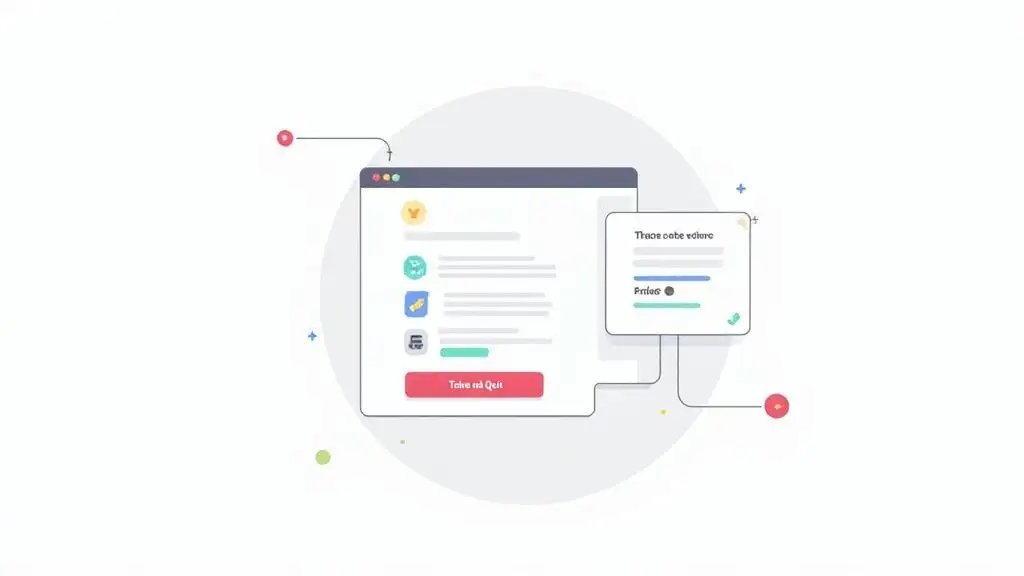
Pioneered by companies like HubSpot with its famous Website Grader, this strategy taps into our natural curiosity. We all want to know how we stack up or what our "marketing superpower" is. By designing a tool that answers a pressing business question (e.g., "What's Your Company's True Sales Efficiency Score?"), you create a magnet for your ideal customers. They get instant insight, and you get a lead who has self-identified a specific pain point.
The Strategic Breakdown
The real power here is in the data. Each answer a prospect gives is a golden nugget of information that can be used for segmentation and personalization. You aren't just getting a name and email; you're getting a detailed profile of their challenges, goals, and company size before your first conversation even starts. This is one of the most effective lead generation examples for creating a targeted follow-up.
-
Buying Signal: A user completing your "ROI Calculator for [Your Solution]" is practically screaming that they have a budget and are evaluating options. Their inputs reveal their exact business case.
-
Workflow:
-
Develop: Create a tool or quiz that solves a specific problem or answers a key question for your audience.
-
Gate Results: Offer the experience freely, but require an email to see the final, personalized results.
-
Promote: Share the tool on social media, in ads, and with partners as a free resource.
-
Nurture: Segment leads based on their answers and send them hyper-relevant follow-up content and case studies that speak directly to their results. The data you gather is a perfect start for a more advanced strategy. You can learn more about lead scoring best practices to see how this works.
-
-
KPIs: Completion Rate, Leads Generated, Cost Per Lead (CPL), Subsequent Engagement Rate.
Top 10 Lead Generation Methods Comparison
| Strategy | 🔄 Implementation complexity | ⚡ Resource requirements | 📊 Expected outcomes (quality) | Ideal use cases | 💡 Key advantage |
|---|---|---|---|---|---|
| Content Marketing & Lead Magnets | Medium — ongoing creation & gating | Medium‑High — writers, designers, delivery systems | Sustainable lead capture over months; high ROI when targeted ⭐⭐⭐⭐ (long-term) | B2B, SaaS, professional services, education | Builds authority + email list; provides value upfront |
| Landing Page Optimization | Medium — design + continual A/B testing | Low‑Medium — page builders, analytics | Higher conversion when optimized; 2–15%+ possible ⭐⭐⭐⭐ (short‑term to improve) | Campaigns, PPC, product offers, event signups | Fast to test and measure; focused conversions |
| Email Marketing Campaigns | Medium — segmentation + automation setup | Low — ESPs, content, list management | Very high ROI and scalable engagement ⭐⭐⭐⭐⭐ (immediate & long-term) | Nurture sequences, retention, promos (B2B & B2C) | Direct, measurable communication; highest ROI |
| Social Media Lead Generation | Medium‑High — platform-specific strategies | Medium — creative, community management, ad spend | Quick lead volume but variable quality ⭐⭐⭐ (short-term) | B2B on LinkedIn; B2C on Facebook/Instagram/TikTok | Large reach with precise platform targeting |
| Webinars and Virtual Events | High — production, scheduling, engagement | High — hosts, promotion, tech stack | Highly qualified leads; strong credibility ⭐⭐⭐⭐ (event-driven) | Complex sales, product demos, thought leadership (B2B) | Direct interaction and perceived high value |
| SEO and Organic Search | High — technical + ongoing content & links | Medium‑High — content, SEO tools, outreach | Sustainable, high-intent traffic; compounding ROI ⭐⭐⭐⭐⭐ (3–12+ months) | Any with search demand; long-term growth (SaaS, ecommerce) | Lowest long-term CPL; durable credibility |
| Referral Programs & Word‑of‑Mouth | Medium — program design & tracking | Low‑Medium — incentives, tracking tools | Very high conversion and lifetime value ⭐⭐⭐⭐⭐ (warm leads) | Consumer apps, SaaS with strong product fit | Highest lead quality and conversion; low CPA |
| Partnerships & Co‑Marketing | High — partner selection & coordination | Medium — shared content/campaign costs | Accelerated reach; variable lead quality ⭐⭐⭐⭐ (short‑medium term) | Market expansion, integrations, B2B growth | Access to relevant audiences and shared costs |
| Paid Search Advertising (PPC) | Medium — campaign setup & optimization | High — ongoing ad spend + management | Immediate traffic & leads; measurable ROI ⭐⭐⭐⭐ (immediate) | High‑intent keywords, transactional offers | Fast, scalable acquisition with precise targeting |
| Interactive Content & Quizzes | Medium‑High — development & personalization | Medium — dev/design + promotion | High engagement and capture rates (20–40%+) ⭐⭐⭐⭐ (short‑term engagement) | Lead qualification, audience segmentation, B2C & product discovery | Rich data capture and viral/shareable experiences |
The Common Thread: Signal, Enrich, Personalize
We’ve dissected a mountain of B2B lead generation examples. We’ve seen everything from targeted LinkedIn ads for newly-funded startups to clever cold email sequences triggered by a VP of Engineering joining a new company. It's a lot. But if you zoom out past the specific channels and scripts, a simple pattern emerges.
Every successful play you saw today boils down to the same three steps: Signal, Enrich, Personalize.
That’s the game. Forget the noise, the "growth hacks," and the flavor-of-the-month tactics. Your ability to consistently find prospects who are actually in-market, get their real contact details, and craft a message that doesn't scream "I’m a robot" is what separates a packed pipeline from an empty one.
The Signal: Your Cue to Act
The signal is the event, the trigger, the "why you, why now." It’s the digital breadcrumb that tells you a company or individual might need what you’re selling.
-
A company raises a Series B? Signal. They have cash to spend on growth.
-
A new CMO starts at a target account? Signal. They're likely reviewing their tech stack.
-
A job post for "Salesforce Administrator" appears? Signal. They're investing heavily in their CRM ecosystem.
Without a signal, you're just yelling into the void. You're the person at the party talking about their SaaS product to someone who just wants to find the snack table. A signal gives you a reason to start a conversation. It turns your cold outreach into a warm, relevant introduction.
The Enrichment: Turning Clues into Contacts
A signal is useless if you can't act on it. Finding out a company just adopted HubSpot is great, but who do you talk to? What's their direct email? Their mobile number? Are they even the right person?
This is where enrichment comes in. It's the unglamorous, but vital, detective work of connecting the signal to a specific human being. It means verifying job titles, finding accurate contact data, and pulling in company details like tech stack and employee count.
Doing this manually is a soul-crushing time suck. It's a Frankenstein's monster of LinkedIn Sales Navigator, multiple data provider tabs, and a spreadsheet that's one wrong copy-paste away from total disaster. This is where most outbound efforts break down, not from a lack of strategy, but from the sheer operational drag of manual research.
That's why we built Munch. It saves you countless hours by automating data enrichment for your leads and prospects.
The Personalization: The Difference Maker
With a signal and enriched data, you have everything you need to personalize. This isn't about using a {{first_name}} token and calling it a day. It’s about using the context you’ve gathered to craft a message that is undeniably for them.
-
Weak Personalization: "Hi Sarah, saw you're the new CMO at Acme. Congrats!"
-
Strong Personalization: "Hi Sarah, congrats on the new CMO role at Acme. Companies using a tech stack like yours often struggle with X when they scale past 500 employees. We helped a similar company, [Competitor], solve this."
The second one works because it connects the signal (new job) with enriched context (their tech stack) to offer a specific, relevant solution. You sound less like a salesperson and more like a helpful expert who’s done their homework. These are the kinds of lead generation examples that actually get responses. Your entire goal is to make the prospect think, "Okay, this person gets it." That thought is the first step toward a closed deal.
Tired of duct-taping your signal, enrichment, and personalization steps together across ten different tools? Munch unifies this entire workflow into a single platform, turning messy, manual research into a streamlined, automated process. Stop clicking around and start having more conversations by checking out Munch.