10 Cold Email Best Practices to Triple Your Replies in 2025

By Mriganka Bhuyan
•Founder at Munch
Remember when your inbox was a simpler place, maybe filled with emails from a Nigerian prince or a chain letter promising good luck if you forwarded it to 10 friends? Simpler times, indeed. Today, your prospect's inbox is a battlefield, a highly competitive space where attention is the ultimate currency. Getting noticed requires more than just a good product; it demands strategy, respect, and a bit of carefully crafted art.
This isn't just another list of generic tips you have already seen a dozen times. We are diving deep into 10 actionable cold email best practices that separate the sales legends from the spam folder casualties. Think of this as your playbook for breaking through the noise and starting meaningful conversations that lead to real business outcomes. We are moving beyond the obvious and into the specific tactics that high performing B2B outbound teams use to consistently book meetings and build pipeline.
We will cover everything from subject lines that channel the intrigue of a season finale cliffhanger to personalization that goes far beyond a simple [First_Name] merge tag. You will learn how to structure multi-channel sequences, optimize deliverability to avoid the dreaded promotions tab, and A/B test your way to a finely tuned outreach machine. Whether you are a seasoned SDR manager or a founder building your first outbound motion, these tactics will help you craft emails that prospects actually want to open and, more importantly, reply to. Let us get started.
1. Personalization and Research
The most effective cold emails do not feel cold at all. This is the core principle of personalization, a cornerstone of modern cold email best practices. It is the difference between an email that gets instantly archived and one that earns a reply. This practice involves conducting thorough research on your prospects to include specific, relevant details that demonstrate genuine interest in their work, company, and challenges. Think of it as the opposite of a generic "Dear Sir or Madam" blast; it shows you have done your homework.
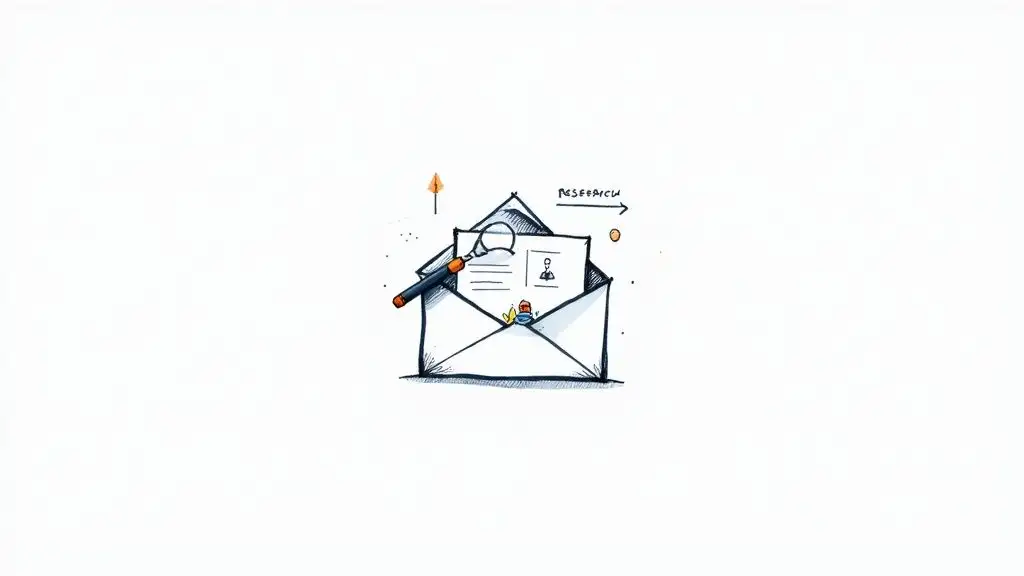
This level of detail immediately builds rapport and credibility. Instead of starting with a generic pitch, you can lead with a highly relevant observation that positions you as a thoughtful peer, not just another salesperson.
How to Implement Personalization Effectively
Effective personalization goes beyond just using {{first_name}}. True personalization requires digging for unique "trigger events" or points of connection.
-
Reference Recent Achievements: Mention a recent promotion you saw on LinkedIn, a new product their company launched, or a successful funding round announced in the news. A simple "Congrats on the promotion to Director of Awesome! Well deserved" works wonders.
-
Cite Their Content: Did they recently write an insightful blog post or get quoted in an industry publication? Referencing it shows you value their expertise.
-
Note a Shared Connection: Highlighting a mutual connection, a shared alma mater, or attendance at the same industry conference creates an instant sense of familiarity.
Key Insight: The goal is to make the prospect feel seen and understood. A well-researched compliment or observation validates their work and makes them more receptive to your message. As research from HubSpot shows, this is not just theory: personalized emails can achieve click-through rates up to 50% higher than their generic counterparts. You can discover more about this in our guide to sales prospecting best practices.
2. Short, Scannable Email Copy
In a world of shrinking attention spans, brevity is your superpower. One of the most critical cold email best practices is to keep your copy short, scannable, and incredibly easy to digest. Prospects are busy, often checking emails on their phones while juggling other tasks. Your message must respect their time by getting straight to the point, making your value proposition clear within seconds, not paragraphs.
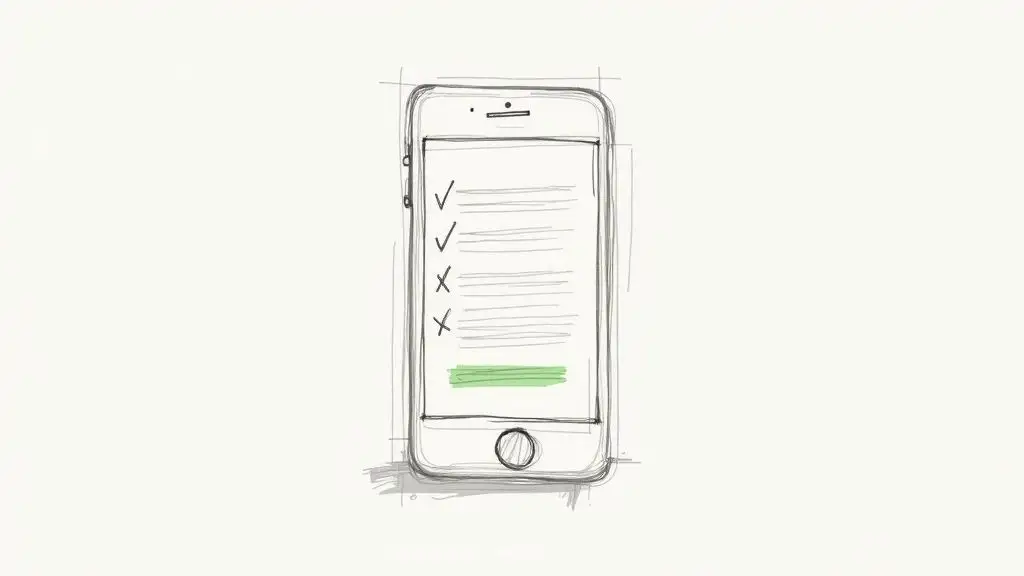
This approach focuses on clarity over complexity. Think of it less like an academic paper and more like a series of well-placed bullet points. The ideal cold email is typically between 50 and 125 words, a length that is easily consumed on a mobile device without endless scrolling.
How to Implement Short, Scannable Copy
Mastering concise copy is a process of disciplined editing. The goal is to remove every ounce of fluff until only the most impactful message remains.
-
Write, Then Edit Ruthlessly: Draft your email without worrying about length. Then, go back and challenge every word. If a sentence does not directly serve the email's purpose, cut it. Channel your inner Marie Kondo: if it doesn't spark joy (or a reply), thank it and let it go.
-
Embrace White Space: Use short paragraphs (1-2 sentences) and line breaks to separate ideas. This makes the email feel less intimidating and guides the reader's eye down the page.
-
Focus on One Call to Action: Avoid overwhelming your prospect with multiple requests. Define the single most important action you want them to take and make it crystal clear.
-
Read It Aloud: This simple trick helps you identify awkward phrasing and unnecessary words. If it does not sound natural when spoken, it likely will not read well either.
Key Insight: Short emails are not just a preference; they are a strategic advantage. Data from numerous platforms, including Mailshake and Lemlist, consistently shows an inverse relationship between word count and response rate. Groove's famous six-sentence cold email, which generated over 300 demo requests, is a testament to the power of brevity. You can learn more about crafting compelling messages in our guide to writing cold emails.
3. Strong Subject Lines
Your subject line is the gatekeeper to your email. No matter how brilliantly crafted your message is, if the subject line fails, the email remains unread. This is the first and often only chance you get to make an impression, making it a critical component of cold email best practices. A strong subject line piques curiosity, communicates relevance, and earns the click without resorting to deceptive clickbait tactics.

The goal is to stand out in a crowded inbox filled with internal memos, newsletters, and other pitches. A compelling subject line acts as a concise, powerful preview that convinces the recipient your email is worth their valuable time.
How to Write Compelling Subject Lines
Crafting the perfect subject line is both an art and a science. It involves a blend of creativity, directness, and a deep understanding of your prospect’s priorities.
-
Be Specific and Relevant: Vague subject lines get ignored. Directly reference the recipient's company, a recent event, or a known challenge. For example, "Quick question about [Company Name]'s expansion" is instantly more relevant than "Question".
-
Focus on Benefit or Curiosity: Lead with a clear benefit or create an information gap that makes the prospect want to learn more. A subject like "5-minute growth audit for [Company]" clearly states a benefit and the low time commitment required.
-
Use Social Proof: Mentioning a well-known competitor or a shared connection can lend immediate credibility. A powerful example is, "We helped [Competitor] reduce costs by 35%".
-
Keep it Mobile-Friendly: Aim for under 50 characters to ensure your full subject line is visible on mobile devices, where a significant portion of emails are first opened.
Key Insight: The best subject lines are simple, direct, and personalized. Avoid using ALL CAPS, excessive exclamation points, or spam-trigger words like "Free" or "Limited Time," which can land you in the dreaded spam folder. Instead, focus on creating genuine intrigue or communicating immediate value. A/B testing different approaches, such as a question versus a direct statement, is crucial for optimizing open rates over time.
Pro Tip: Instead of juggling spreadsheets, lead gen tools, and personalization platforms use Munch. It unifies high-intent lead discovery, real-time data enrichment, and AI-powered personalization into a single, seamless workflow.
4. Clear and Specific Call-to-Action (CTA)
After you have captured their attention and demonstrated value, the final step is to guide your prospect toward a specific, low-friction next step. A vague or demanding call-to-action is where many otherwise great cold emails fail. The best practice is to include a single, explicit CTA that tells the recipient exactly what you want them to do, removing all guesswork and making it incredibly easy to respond. Think of it as the opposite of a choose-your-own-adventure novel; give them one clear path forward.
This clarity reduces the cognitive load on your prospect, which is crucial when they are likely reviewing your email between meetings. A simple, direct question or instruction is far more likely to get a response than an open-ended request like "Let me know your thoughts."
How to Implement a Strong CTA
An effective CTA minimizes effort and ambiguity. Instead of asking for a meeting, you can ask a simple interest-based question or provide a direct link. This approach is a core part of modern cold email best practices.
-
Make it a Simple Question: Frame your CTA as an easy yes/no question. For example, "Would a 5-minute video explaining this be helpful for your team?" or "Reply with ‘yes’ if you would like me to send over the case study."
-
Specify the Time Commitment: Reduce hesitation by clearly stating how much time your request requires. Use phrases like "Does Tuesday at 2pm work for a quick 15-minute call?"
-
Avoid Multiple Asks: Do not confuse your prospect by asking them to book a meeting, visit your website, and follow you on LinkedIn. Stick to one primary goal for the email.
Key Insight: The goal is to make saying "yes" as easy as possible. By proposing a specific, low-effort action, you dramatically increase the probability of a positive response. Platforms like Outreach and SalesLoft have built entire systems around this principle of reducing friction to guide prospects smoothly through the sales funnel.
5. Multi-Channel Sequencing
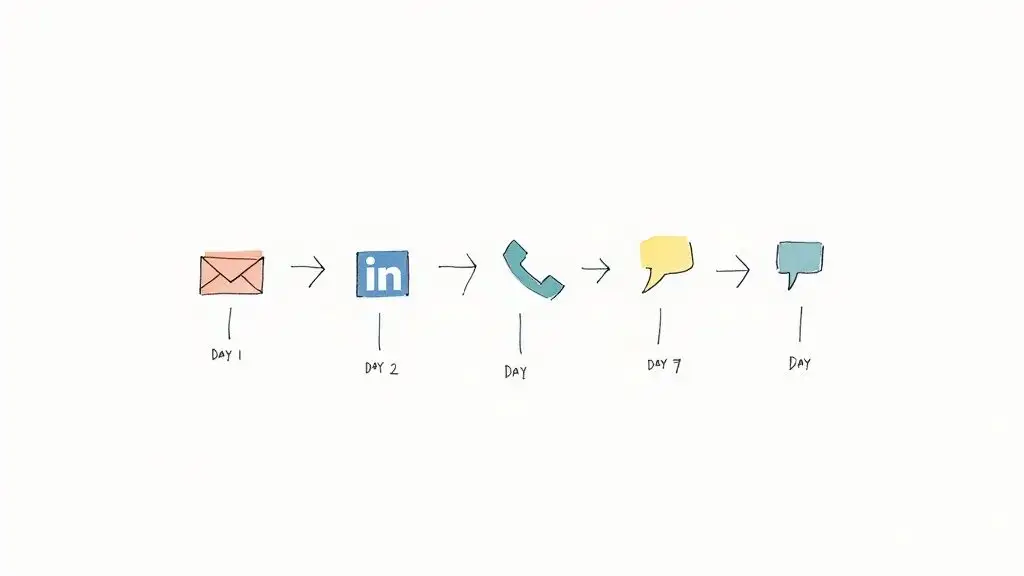
Relying on a single email to break through the noise is like sending a message in a bottle and expecting a reply. A modern approach to cold email best practices involves orchestrating a series of coordinated touchpoints across different platforms. This is multi-channel sequencing: a strategic campaign that engages prospects on email, LinkedIn, and sometimes even by phone, creating a persistent yet professional presence that is hard to ignore.
This method acknowledges that your ideal prospect lives in a multi-platform world. By meeting them where they are, you significantly increase the chances of getting noticed. Instead of a one-and-done email, you create a thoughtful narrative that unfolds over time and across different mediums, making your outreach feel more like a genuine attempt to connect than a simple sales pitch.
How to Implement Multi-Channel Sequencing Effectively
A successful sequence is more than just repeated contact; it is about adding progressive value with each touchpoint. Each message should build on the last without simply repeating the same request.
-
Vary Your Messaging: Your initial email introduces the core value proposition. A LinkedIn connection request might reference a shared group or interest. A follow-up email could share a relevant case study, and a final message might offer a quick, no-obligation resource.
-
Space Out Your Touchpoints: Avoid overwhelming your prospects. A typical cadence involves spacing interactions 3-5 days apart, giving them time to see and consider your message without feeling spammed.
-
Start with a Core Combination: The most effective and scalable starting point is combining email and LinkedIn. For example: Day 1: Personalized email. Day 3: LinkedIn connection request with a short, relevant note. Day 7: Follow-up email referencing the LinkedIn request.
-
Set Clear Limits: A well-defined sequence has a clear end point. Most effective sequences run between 5-7 total touchpoints before you respectfully move on, ensuring you do not burn bridges.
Key Insight: The power of this strategy is in its synergy. According to HubSpot research, combining email with phone calls can yield 71% higher response rates than using email alone. Tools like Lemlist and Outreach have popularized this approach, with some users reporting a 45% improvement in response rates by adding LinkedIn touchpoints to their email sequences. To dig deeper into building these kinds of campaigns, you can explore our detailed guide on outbound lead generation.
6. Value Proposition and Problem Awareness
The best cold emails get straight to the point, not with a pitch, but with a problem. This practice involves opening your email by immediately demonstrating a deep understanding of a challenge or goal that is highly relevant to your prospect. Instead of leading with who you are, you lead with what you know about their world, making your message instantly more compelling. This is a core tenet of effective cold email best practices, shifting the focus from "look at me" to "I understand you."
This approach hooks the reader because it resonates with their daily professional life. By articulating a problem they are likely facing, you position yourself as a relevant expert who thinks strategically about their industry, rather than just another vendor pushing a generic product. It shows you have considered their context and are not just sending a templated blast.
How to Implement Problem-Aware Value Propositions
The key is to frame your value proposition as the solution to a specific pain point. This requires research into common industry or role-based challenges to ensure your opening lines hit the mark.
-
Lead with an Industry-Specific Problem: Start with an observation like, "Most B2B SaaS founders struggle with containing customer acquisition costs as they scale beyond Series A." This shows you know their specific journey.
-
Use Data to Highlight the Problem: A powerful opening is, "Given that 70% of e-commerce companies report cart abandonment as their top challenge, I thought you would find our approach to checkout optimization interesting."
-
Reference Peer Success as Proof: Frame the problem and solution together by mentioning a peer: "We recently helped another logistics firm like yours reduce their average delivery time by 18%, tackling the on-time delivery pressures common in the industry."
Key Insight: The goal is to make the prospect nod in agreement within the first sentence. By starting with "why" they should care, as popularized by Simon Sinek, you create immediate context for your solution. You are not just selling a feature; you are solving a known, quantifiable business problem, which makes your email feel less like an interruption and more like a potential lifeline.
7. Social Proof and Credibility Signals
When a prospect receives an email from an unknown sender, their internal risk detector immediately goes on high alert. Social proof is the antidote. It is the practice of using third-party influence to build trust and legitimacy, effectively telling your prospect, "Don't just take our word for it, look at who else trusts us." This concept, popularized by Robert Cialdini in his seminal book Influence, is one of the most powerful cold email best practices for overcoming initial skepticism.
By including signals like customer logos, impressive results, or media mentions, you borrow credibility from established brands and sources. This simple act transforms your message from a random pitch into a validated opportunity, making the recipient far more likely to engage. It is the business equivalent of choosing a busy restaurant over an empty one; you are showing them they are in good company.
How to Implement Social Proof Effectively
The key is to integrate credibility signals naturally, not as a desperate brag. The goal is to build confidence, not to overwhelm.
-
Leverage Big Names: Mentioning well-known clients immediately establishes your legitimacy. A simple line like, “We’re proud to work with leaders like Salesforce, Microsoft, and HubSpot,” can significantly boost your credibility.
-
Show Quantifiable Results: Vague claims are forgettable. Specific, data-backed results are compelling. Instead of "we help companies grow," use "We helped SaaS companies like yours increase their SQLs by an average of 35% in 90 days."
-
Use Third-Party Validation: Citing features in reputable publications or industry awards acts as an unbiased endorsement. For example, "As featured in TechCrunch for our innovative approach to..."
-
Highlight Mutual Connections: This is one of the strongest forms of social proof. Starting your email with, "[Mutual Connection] suggested I reach out," is a surefire way to get your email read.
Key Insight: The most effective social proof is directly relevant to your prospect's world. Mentioning a competitor they respect or a result achieved within their specific industry makes the proof resonate on a personal level. Your goal is to trigger the thought, "If it worked for them, it could work for us." For deeper insights into leveraging these psychological triggers, check out Robert Cialdini's book Influence: The Psychology of Persuasion.
8. Timing, Frequency and Deliverability Optimization
Sending the perfect email at the wrong time is like delivering a brilliant stand-up routine to an empty room. This is where strategic timing, frequency, and technical deliverability come into play, forming a critical trifecta of cold email best practices. This discipline ensures your carefully crafted message not only reaches the inbox but also arrives at a moment of peak engagement, avoiding the Monday morning delete-fest or the Friday afternoon void.
Mastering these elements prevents your emails from landing in spam folders and maximizes the probability of getting an open, a click, and a reply. It is the technical backbone that supports all your creative personalization and compelling copy.
How to Implement Timing, Frequency and Deliverability Effectively
Optimizing these factors involves a mix of well-established industry data and disciplined technical setup. It is about being strategic with your send schedule and meticulous with your domain health.
-
Optimal Send Window: Data from Lemlist and HubSpot consistently shows that Tuesday through Thursday, between 9 AM and 11 AM in the recipient's local time, is the golden window for B2B outreach.
-
Technical Authentication: Before sending a single email, set up your SPF, DKIM, and DMARC records. MailerLite data reveals that up to 25% of cold emails land in spam due to these authentication issues. Think of it as your email's official ID; without it, you look suspicious to inbox providers.
-
Sending Cadence: Avoid blasting your entire list at once. A steady, human-like sending volume, such as 50 to 100 emails per day from a single address, helps build and maintain a positive sender reputation.
Key Insight: Deliverability is not a one-time setup; it is an ongoing practice. Consistently warming up new domains, cleaning your lists to remove bounced emails, and avoiding spam trigger words like "FREE," "GUARANTEE," or "URGENT" are essential for long-term success. A thoughtful approach to your sending rhythm is a core component of a successful outreach strategy. You can build these principles into your outreach with our guide to sales cadence best practices.
9. A/B Testing and Continuous Optimization
What works for one audience may not work for another. This is where A/B testing, also known as split testing, becomes a crucial part of any cold email strategy. It’s the practice of systematically comparing two or more versions of a single variable, like a subject line or call-to-action, to determine which one performs better. This data-driven approach removes guesswork and allows you to continuously refine your outreach for maximum impact.
Think of it as a science experiment for your sales funnel. By isolating one element and testing it against a control, you can definitively see what resonates with your prospects. This iterative process of testing, learning, and applying insights is what separates high-performing outbound teams from those who are just "spraying and praying."
How to Implement A/B Testing Effectively
Successful A/B testing is methodical and disciplined. The key is to change only one variable at a time to ensure you can attribute performance changes accurately.
-
Isolate a Single Variable: Start with the element that has the biggest potential impact. Test different subject lines first, then move on to the call-to-action, then the opening line, and finally the overall body copy.
-
Use a Sufficient Sample Size: To get statistically significant results that are not just a fluke, you need a decent sample size. Aim to send each variation to at least 500-1,000 contacts.
-
Run Sequential Tests: Once you find a winning subject line, make it the new control. Then, use that winning subject line to A/B test your next variable, like the CTA. This builds on your learnings progressively. For example, you might test a question-based CTA ("Open to learning more?") against a direct one ("Book a 15-minute call here").
Key Insight: Continuous optimization is a mindset, not a one-time task. Document every test, its hypothesis, the results, and what you learned. As growth marketing leaders from platforms like HubSpot and Optimizely have shown, consistent, data-backed iteration is the most reliable path to improving your cold email best practices and achieving scalable results. Your goal is to build a playbook of what works for your specific audience.
10. Building Genuine Relationships and Long-term Perspective
The most impactful cold email best practices shift the goal from securing an immediate meeting to starting a meaningful conversation. This is the essence of a relationship-first approach, where the aim is to build long-term value, not just close a short-term deal. It treats outreach as the beginning of a professional connection, transforming your role from a seller into a valuable resource. Think of it as playing the long game; you are planting seeds that will grow into trust and, eventually, profitable partnerships.
This mindset fundamentally changes your outreach. Instead of a hard pitch, your email becomes a vehicle for delivering value upfront, demonstrating that you are invested in the prospect's success, not just your own quota. This approach, championed by relationship-focused experts like Keith Ferrazzi and Simon Sinek, builds a foundation of credibility that makes future asks far more effective.
How to Implement a Relationship-First Approach
Adopting this perspective requires patience and a focus on giving before you ask. The goal is to become a welcome presence in their inbox, not a nuisance to be avoided.
-
Lead with Unconditional Value: Share a relevant article, a helpful resource, or offer an introduction to a useful contact in your network with no strings attached. Your first touchpoint should be purely about helping them.
-
Respect Boundaries and Rejection: If a prospect says "no," respect it gracefully. Thank them for their time and ask if it is okay to keep in touch periodically. This professionalism leaves the door open for the future.
-
Nurture Over Time: For prospects who are interested but not ready, create a long-term nurture sequence. Send them valuable, non-salesy content every few months to stay top of mind and reinforce your expertise.
-
Focus on Being Helpful: Before every send, ask yourself: "Does this email help my prospect, or does it only help me?" The answer should always be the former.
Key Insight: Shifting from a transactional to a relational mindset dramatically improves long-term results. Not every prospect is ready to buy today, but a positive, value-driven interaction ensures they will remember you when the time is right. As Jeb Blount explains in Fanatical Prospecting, the pipeline you build today through genuine connection is what secures your success months down the line.
10-Point Cold Email Best Practices Comparison
| Technique | Implementation Complexity 🔄 | Resource Requirements ⚡ | Expected Outcomes 📊 | Effectiveness/Quality ⭐ | Ideal Use Cases | Quick Tip 💡 |
|---|---|---|---|---|---|---|
| Personalization and Research | High (🔄🔄🔄) | High (data, time, tools) (⚡⚡⚡) | Higher open/response (≈25–50%) and better lead qualification | ⭐⭐⭐⭐⭐ | ABM, high-value or complex deals | Use LinkedIn/CRM, focus on 2–3 specific details |
| Short, Scannable Email Copy | Low (🔄) | Low–Medium (writing skill) (⚡⚡) | Higher read-through and mobile performance; better response | ⭐⭐⭐⭐ | High-volume outreach, mobile audiences | Edit ruthlessly to 50–125 words; one clear CTA |
| Strong Subject Lines | Low–Medium (🔄🔄) | Low (creative time, A/B tests) (⚡) | Direct lift in open rates; easy A/B wins | ⭐⭐⭐⭐ | Any campaign needing improved opens | Keep <50 chars, avoid spam words, A/B test variations |
| Clear and Specific CTA | Low (🔄) | Low (copy + simple tools) (⚡) | Higher reply-to-action conversion; measurable results | ⭐⭐⭐⭐ | Meeting requests, demos, simple asks | Use single low-friction CTA (yes/no or one click) |
| Multi-Channel Sequencing | High (🔄🔄🔄) | High (coordination, automation) (⚡⚡⚡) | 3–5× response improvement vs single-channel | ⭐⭐⭐⭐⭐ | Mid/high-value outreach, account penetration | Space touchpoints, vary channels, cap to 5–7 touches |
| Value Proposition & Problem Awareness | Medium (🔄🔄) | Medium (research + messaging) (⚡⚡) | More qualified replies; stronger resonance | ⭐⭐⭐⭐ | Complex products, role-specific messaging | Lead with problem, include 1–2 proof points, be concise |
| Social Proof & Credibility Signals | Low–Medium (🔄🔄) | Medium (case studies, permissions) (⚡⚡) | +20–35% response when relevant and specific | ⭐⭐⭐⭐ | Skeptical prospects, new-market entry | Use 3–5 relevant logos/results; be verifiable |
| Timing, Frequency & Deliverability Optimization | Medium–High (🔄🔄🔄) | Medium–High (tech setup, monitoring) (⚡⚡⚡) | 15–25% open lift; better inbox placement long-term | ⭐⭐⭐⭐ | Large-scale campaigns, new sending domains | Set SPF/DKIM/DMARC, warm up domains, send Tue–Thu AM |
| A/B Testing & Continuous Optimization | Medium (🔄🔄) | Medium (tools, volume, analysis) (⚡⚡) | Incremental, compounding improvements over time | ⭐⭐⭐⭐ | Scaling programs, data-driven teams | Test one variable at a time; use adequate sample sizes |
| Building Genuine Relationships & Long-term Perspective | Medium (🔄🔄) | Medium (nurture sequences, time) (⚡⚡) | Higher LTV, referrals, slower but sustainable ROI | ⭐⭐⭐⭐ | Brand-building, long sales cycles, retention focus | Lead with value, respect “no”, nurture over months |
Your Mission, Should You Choose to Accept It
And there you have it. We have journeyed through the intricate, data-driven, and surprisingly human landscape of modern outbound. This is not just a collection of tips; it is a strategic framework for transforming your cold outreach from a numbers game into a relationship-building engine. Mastering these cold email best practices is less about finding a mythical, one-size-fits-all template and more about developing a repeatable, scalable process grounded in empathy, data, and relentless optimization.
Think of it like building a high-performance engine. Each component we discussed, from hyper-personalization and scannable copy to multi-channel sequencing and A/B testing, is a critical part. If one piece is weak, the entire system sputters. A brilliant subject line is useless if your email lands in spam. A perfect value prop falls flat if it is sent to the wrong person at the wrong time. True success lies in the synthesis of all these elements working in harmony.
From Interruption to Invitation
The fundamental shift we have explored is moving from being an interruption in someone's inbox to becoming a welcome, valuable invitation. This is the core difference between an email that gets instantly deleted and one that sparks a genuine conversation. It is the difference between being a generic vendor and a potential strategic partner.
Your mission is to internalize this philosophy. The most crucial takeaway from this guide is that every "best practice" ultimately serves a single purpose: to earn the prospect's attention and respect.
-
Deep Personalization and Research shows you have done your homework and respect their time.
-
Concise, Value-Driven Copy proves you understand their problems and can communicate a solution efficiently.
-
Strategic Sequencing and Timing demonstrates professionalism and persistence without being a nuisance.
-
Continuous Testing and Optimization signals a commitment to data-driven improvement, not just guesswork.
This is not just about getting more replies. It is about building a stronger pipeline, shortening sales cycles, and creating a brand reputation that precedes you. When you execute this strategy correctly, prospects do not just reply; they thank you for reaching out because your message was timely, relevant, and genuinely helpful.
The Path to Outbound Mastery
So, what is next? Do not let this be just another article you read and forget. The journey to mastering outbound is an iterative process. It is not about implementing all ten practices flawlessly overnight. It is about picking one or two areas and committing to significant improvement.
Your Action Plan:
-
Audit Your Current Process: Where are you weakest? Is it your subject lines? Your CTA? Your deliverability? Be honest and identify the biggest bottleneck.
-
Pick One Area to Revolutionize: If your personalization is weak, dedicate the next two weeks to using enriched data to craft context-aware openers. If your sequencing is nonexistent, build your first simple, multi-channel cadence.
-
Measure Everything: Track your open rates, reply rates, and meeting booked rates with scientific rigor. You cannot improve what you do not measure.
-
Embrace the "Test and Learn" Mindset: Your first new approach might not work. That is not failure; that is data. As the great philosopher of our time, Taylor Swift, might say, you need to be willing to shake it off and try a new version.
The world of B2B sales is crowded and noisy. The only way to cut through is with relevance, value, and precision. By applying these advanced cold email best practices, you are not just sending better emails. You are building a more intelligent, efficient, and ultimately more profitable outbound machine. The tools and tactics are at your fingertips. Now, go build.
Tired of juggling spreadsheets, lead gen tools, and personalization platforms? Munch unifies high-intent lead discovery, real-time data enrichment, and AI-powered personalization into a single, seamless workflow. Stop the manual grind and start implementing these best practices at scale by visiting Munch.