What Is Lead Scoring and How Does It Actually Work

By Mriganka Bhuyan
•Founder at Munch
At its core, lead scoring is a system for ranking prospects based on how valuable they seem to your business. Think of it like a credit score, but for sales leads. By assigning points for who they are and how they interact with you, you can quickly see who's ready for a sales call and who needs more time.
Stop Chasing Ghosts, Start Closing Deals

Does your sales team’s day feel like a wild goose chase? They spend their time pursuing every single name on their list, hoping one will turn into a real opportunity. The reality? Most of those "leads" were just browsing. This is what happens when you have a pipeline with no prioritization. Every lead gets the same level of attention, no matter their actual fit or interest level. It’s a recipe for wasted effort, missed opportunities, and a completely exhausted team.
When there's no system to tell the hot leads from the cold ones, your reps are flying blind. They might spend days trying to connect with someone who only downloaded a single whitepaper, while a high value decision maker who just spent 10 minutes on your pricing page gets completely overlooked. That’s not just inefficient; it’s a direct hit to your revenue goals.
The Strategic Shift From Guesswork to Growth
This is where lead scoring completely changes the game. It turns that chaotic, "spray and pray" approach into a precise, well oiled machine. It’s less about hoping for a lucky break and more about making smart, data driven decisions.
Think of it as the bouncer for your sales funnel. It checks IDs, gauges interest, and only lets the most qualified prospects through the velvet rope to your sales team.
This system works by assigning points based on all sorts of signals, such as:
-
Who they are: Their job title, company size, industry, or location.
-
What they do: The web pages they visit, the content they download, the emails they open and click.
-
How interested they seem: Actions that scream "I'm ready to buy," like requesting a demo or visiting your pricing page multiple times.
By attaching a numerical value to these actions and attributes, you create a simple, clear hierarchy. A lead with a score of 95 is a red hot priority. A lead with a score of 15? They're probably better off in a long term nurturing sequence for now.
This method takes the guesswork out of the equation. It gives your team the confidence to focus their energy where it will have the biggest impact, ensuring that the best leads get the attention they deserve, right when they deserve it. When you combine this with solid sales prospecting best practices, you build a predictable and repeatable engine for growth.
In the end, it’s all about working smarter, not just harder.
Lead Scoring At a Glance
Let's look at a quick comparison to see just how different a sales pipeline looks with and without a scoring system in place.
| Scenario | Without Lead Scoring (The Guessing Game) | With Lead Scoring (The Strategic Play) |
|---|---|---|
| Daily Focus | Reps chase every lead, regardless of quality or interest. | Reps focus only on the top scoring, most engaged leads. |
| Efficiency | High volume of low quality calls and emails; lots of wasted time. | High quality conversations with leads who are actually interested. |
| Marketing & Sales | Disconnected; Marketing sends over every lead, frustrating Sales. | Aligned; a clear score defines what makes a lead "sales-ready." |
| Outcomes | Low conversion rates, long sales cycles, and team burnout. | Higher conversion rates, shorter sales cycles, and more revenue. |
The difference is stark. One approach is based on hope and volume, while the other is a strategic play rooted in data and intelligent prioritization.
The Two Sides of a High-Quality Lead
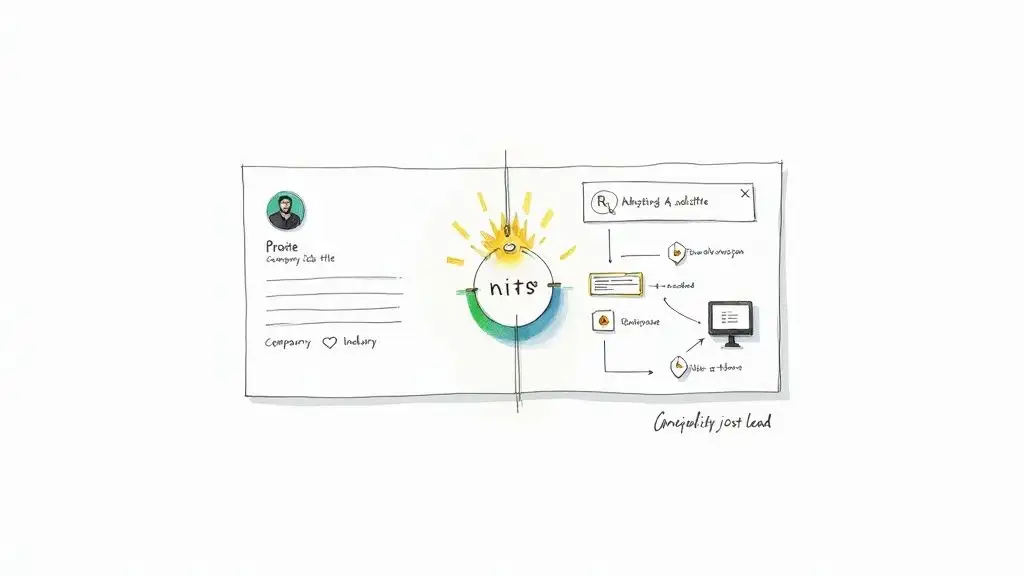
To make lead scoring really click, you need the right ingredients. The points we assign to a lead aren’t just pulled out of thin air. They’re based on two very different, but equally crucial, types of signals: explicit and implicit.
Think of it like being a detective. You need the hard facts, the evidence, but you also need to read the suspect's behavior. One tells you if a lead is a good fit for what you sell, and the other reveals their level of interest. You absolutely need both to build a score your sales team can actually trust.
Explicit Data: What a Lead Tells You
Explicit data is the straightforward information a lead gives you about themselves. It's the "who" and "where" of your prospect. This is the stuff they type into a form, pick from a dropdown menu, or list on their professional profiles. In a way, it’s like their business dating profile; they’re telling you exactly who they are and what they’re about.
This kind of information is gold for figuring out if a lead fits your Ideal Customer Profile (ICP). It helps you answer those basic qualification questions before a salesperson wastes time on a call.
Here are some classic examples of explicit data:
-
Job Title: Are they a decision maker, like a "VP of Marketing," or an intern just doing research?
-
Company Size: Do they work at a 10 person startup or a 10,000 employee enterprise? This immediately helps you see if they have the kind of problems you solve.
-
Industry: Are they in a sector you know you can help, like SaaS, healthcare, or retail?
-
Geographic Location: Are they in a region or country where you can actually do business?
A lead who is a "Director of Sales" at a "500 person tech company" in the "United States" is giving you clear, explicit signals that they could be a fantastic fit. This info is the foundation of their score.
Pro Tip: You can build your prospect list using Munch. Simply describe your ideal customer profile in natural language and Munch will give you a list of prospects ready to go!
Implicit Data: What a Lead Shows You
While explicit data is what a lead says, implicit data is all about what they do. This is their digital body language. It's the sum of all the behaviors and actions you see as they interact with your brand across your website, emails, and social channels. It’s less about their static profile and much more about their active interest.
Implicit signals show you a lead's intent and how engaged they truly are. It’s the difference between someone just window shopping and someone who walks into the fitting room with a pile of clothes. By watching these behaviors, you can gauge how serious they are about making a purchase.
By tracking implicit signals, you're not just guessing who is interested; you're observing their journey and measuring their intent based on real actions. This is how you separate the curious from the committed.
Here are some of the most valuable implicit signals to keep an eye on:
-
Website Activity: Did they visit your pricing page three times this week? That’s a massive buying signal.
-
Content Downloads: Grabbing a top of funnel ebook is one thing, but downloading a bottom of funnel case study is a much stronger indicator of intent.
-
Email Engagement: If they’re consistently opening and clicking links in your nurture emails, they’re staying engaged.
-
High Intent Actions: Requesting a demo, starting a free trial, or filling out a "contact sales" form are the clearest signs of sales readiness you can get.
When you bring these two data types together, you get a complete, 360 degree view of your lead. A "VP of Marketing" (explicit) who just requested a demo (implicit) is a five star, priority one lead. Understanding both sides of this coin is the key to unlocking the real power of lead scoring.
Choosing Your Scoring Method: Manual vs. Predictive
Not all lead scoring is built the same. Think of it like navigation: you could use a paper map or you could use a GPS. Both get you there, but one is a whole lot smarter about finding the best route in real time. When it comes to ranking your leads, you have two main paths: the hands on manual (or rule based) approach, and the AI driven predictive approach.
One gives you complete, granular control, while the other puts a powerful data crunching brain to work for you. Figuring out the difference is the first step in picking the right strategy for your business.
The Manual Approach: Rule-Based Scoring
Manual lead scoring is exactly what it sounds like. You and your team create the rules. It’s a straightforward, "if this then that" system where you assign point values to every trait and action you can track. It's like building with LEGOs; you have all the individual bricks and a clear instruction manual for putting them together.
Sales and marketing get in a room and hash out what really matters. For instance, you might decide, "If a lead's Job Title is 'CEO,' add 15 points." Or, "If they visit the pricing page, that's worth 10 points."
This method gives you total transparency. You know exactly why a lead has the score it does because you wrote the rulebook. For companies just dipping their toes into lead scoring, it's a fantastic starting point because it’s easy to grasp and gets everyone on the same page.
But that control has a trade off. The system is completely static and demands constant upkeep. Buyer behavior evolves, new marketing campaigns go live, and your ideal customer profile can shift. This means you have to constantly go back and tinker with the rules. If you don't, your model will quickly become outdated, like trying to stream a 4K movie on a dial up connection.
The Predictive Approach: AI-Powered Scoring
Predictive lead scoring is the next evolution. Instead of you telling the system what’s important, the system tells you. This approach uses machine learning to sift through all your historical data. Every won deal, every lost opportunity, every customer interaction. It’s designed to spot the hidden patterns and subtle correlations a human might never notice.
The AI model figures out the true DNA of your best customers. Maybe it discovers that leads from a niche industry who download two specific case studies within a week convert at a 30% higher rate. The model then automatically builds a scoring system based on thousands of these tiny data points.
Predictive scoring goes beyond simple rules. It understands the complex, interconnected web of signals that truly signal an intent to buy, and it’s always learning.
The best part? It gets smarter over time. As more leads flow through your pipeline, the model refines its algorithm, constantly improving its accuracy. This automated intelligence saves countless hours of manual tweaking and strips out the human bias that can accidentally creep into rule based systems. It makes sure your sales team is always talking to the people who have the highest statistical probability of becoming customers.
Which Lead Scoring Method Is Right for You?
Deciding between manual and predictive isn’t about chasing the shiniest new tech. It’s a practical decision based on your team’s resources, the quality of your data, and your overall business goals.
| Feature | Manual (Rule-Based) Scoring | Predictive (AI-Powered) Scoring |
|---|---|---|
| Control | Total Control: You set every single rule and point value. | Automated: The AI builds and adjusts the model based on data. |
| Setup | Simpler Initial Setup: Easier to get started with basic rules. | More Complex Setup: Needs clean historical data to train the model. |
| Maintenance | High: Requires constant manual review and adjustments. | Low: The model self optimizes and adapts over time. |
| Accuracy | Good (If Maintained): Relies on your team's assumptions. | Excellent: Uncovers hidden patterns and removes human bias. |
| Best For | Startups, small teams, or businesses new to lead scoring. | Companies with enough sales data and a need to scale efficiently. |
Ultimately, the right choice depends on where you are today. A manual system is a perfect way to build a baseline and get sales and marketing speaking the same language. But as your business scales and your data grows, the automated intelligence of a predictive model becomes the key to staying competitive and working smarter, not harder.
How to Build Your First Lead Scoring Model
Alright, let's move from theory to action. Building your first lead scoring model can feel a little daunting, but it doesn't have to be. The secret is to start simple, focus on what really signals a good lead, and most importantly, get your sales and marketing teams to agree on the rules of the game.
Think of this first model as your MVP, your Minimum Viable Product. It won’t be perfect right out of the gate, and that’s okay. The goal here is to build a basic framework that can start separating the window shoppers from the genuinely interested buyers.
Start with a Simple Point System
The foundation of most lead scoring models is a straightforward point system. A common approach is a scale from 0 to 100, where hitting a certain score (say, 75 points) flags a lead as sales-ready. This total score is built from two things: who the person is (their demographics and company info) and what they're doing (their behaviors on your site).
Now for the most critical step: get your sales and marketing teams in the same room. I’m not kidding, this is non negotiable. If marketing builds a model based on what they think sales wants, you'll end up with a system nobody trusts or uses. Like Ross and Rachel, they'll be on a break. Permanently.
This meeting is where you hash out and agree on a concrete definition for a Sales Qualified Lead (SQL). Once everyone is on the same page about what a "good lead" looks like, you can start assigning points to those characteristics.
Prioritize Key Attributes and Actions
You don’t need to track every single click and data point. In fact, you shouldn't. Start by focusing on a handful of the most impactful signals. I find it helps to divide the scoring criteria into two main buckets:
-
Fit (Explicit Data): How well does this person match your Ideal Customer Profile (ICP)?
-
Engagement (Implicit Data): How interested are they in what you have to offer?
For fit, concentrate on the big picture stuff. A lead from a target industry with the right company size and a decision making job title is obviously more valuable from the get go. For engagement, prioritize actions that signal real buying intent. Someone who requests a demo is miles ahead of someone who just opens a newsletter.
Let the data guide you here. For example, industry research shows that engagement frequency is the top scoring factor for nearly 75% of companies. Other important criteria include lead source, company industry (52%), company size, and budget. Knowing this helps you weigh your points more intelligently. For more context, you can review key lead generation statistics and trends.
The image below shows the difference between the manual, rule based process we're building and a more advanced, predictive approach.

Manual scoring gives you direct control over the rules. Predictive scoring, on the other hand, uses AI to find hidden patterns for you, constantly adapting as it learns from new data.
Example Lead Scoring Point System
To make this crystal clear, let's walk through a basic example. Remember, these point values are just for illustration. Your team needs to decide on numbers that make sense for your business, ideally based on your own historical conversion data. If leads from a specific industry consistently turn into customers, they should get more points. Simple as that.
Here’s what a simple model might look like in a table format:
| Category | Attribute / Action | Points Awarded |
|---|---|---|
| Fit (Explicit) | Job Title is Director or above | +20 |
| Company Size is 100-500 employees (your sweet spot) | +15 | |
| Industry is SaaS or Technology | +10 | |
| From a non-target country | -10 | |
| Engagement (Implicit) | Requested a Demo | +30 |
| Visited the Pricing Page (2+ times) | +15 | |
| Downloaded a Case Study | +10 | |
| Attended a Webinar | +5 | |
| Unsubscribed from email list | Reset to 0 |
Key Takeaway: Notice how high-intent actions like a demo request carry the most weight. Your scoring system should always reward behaviors that bring a lead closer to a sales conversation.
Using this system, a Director of Marketing at a 250 person SaaS company who requests a demo would immediately rack up 65 points (20 + 15 + 30). That’s a strong signal. If they also visited the pricing page, they’d hit 80 points, a clear green light for sales to follow up right away. This method of identifying and prioritizing prospects is a cornerstone of effective outbound lead generation strategies.
Ultimately, building this first model is about creating clarity. It establishes a baseline, aligns your teams, and transforms your lead follow up from a guessing game into a strategic, data informed operation. You can, and should, refine it over time, but starting simple is the best way to get moving.
Keeping Your Scoring System Sharp and Relevant
Launching your lead scoring model is a huge win, but it’s definitely not the finish line. Think of it less like a slow cooker you can set and forget, and more like a high performance race car. It needs regular tune ups to stay ahead of the competition.
Without ongoing maintenance, your once sharp model will quickly lose its edge. Markets shift, your product evolves, and buyer behavior is always changing. A system that isn't regularly calibrated will start sending your sales team on wild goose chases after leads who have long gone cold.
Defining Your MQL Threshold and SLA
The first step in making your model truly actionable is setting the Marketing Qualified Lead (MQL) threshold. This is the magic number, the score a lead must hit to be officially handed off to the sales team. It acts as the gatekeeper, separating the leads that need more nurturing from those who are ready for a real conversation.
Once you’ve agreed on that score, the next crucial piece is creating a Service Level Agreement (SLA) between your marketing and sales teams. This is a formal pact that clearly outlines everyone's responsibilities.
An SLA answers critical questions like:
-
How quickly must a sales rep follow up with a new MQL? (A common standard is within 24 hours.)
-
How many contact attempts should be made before the lead is sent back to marketing?
-
What does that follow up process look like? A well defined set of actions is key, which you can learn more about in our guide on sales cadence best practices.
This agreement is what prevents hot leads from falling through the cracks. It ensures the effort marketing puts into qualifying leads is met with prompt, effective action from sales.
The Continuous Feedback Loop for Optimization
Your scoring model lives and breathes on data. To keep it relevant, you absolutely need a continuous feedback loop. This means scheduling regular check ins, quarterly is a good cadence, to analyze performance and make necessary adjustments.
During these reviews, you’re looking for two main things:
-
What's working? Are leads with high scores consistently converting into opportunities and, eventually, customers? If so, that validates your current scoring logic.
-
What isn't working? Are leads hitting the MQL threshold but then stalling out in the sales process? This could mean your scores are inflated or you’re valuing the wrong signals.
Lead scoring has changed a lot. We've moved from static, rule based models to more dynamic, AI driven systems. High performance teams now treat their scoring logic like an ongoing paid campaign, making adjustments quarterly. This iterative process involves digging into score to conversion data, spotting false positives, and re-evaluating the weights you've assigned to different signals. For a deeper dive, you can explore the latest lead scoring trends for 2025.
By regularly reviewing and refining your model, you ensure it evolves alongside your business. This isn't just maintenance; it's a strategic process that guarantees your sales team consistently receives the highest quality, sales-ready leads.
Common Pitfalls in Lead Scoring (and How to Sidestep Them)
Even the most carefully planned lead scoring strategy can go sideways. Think of it like trying to follow a new recipe. The instructions seem straightforward, but one wrong measurement can throw off the whole dish. The same goes for lead scoring; a few common missteps can easily undermine your entire system.
Most of these pitfalls pop up right at the beginning. You might get too ambitious and build a system that’s way too complex, or you might completely forget to involve the one group of people who absolutely need to trust it: your sales reps.
The "Everything but the Kitchen Sink" Model
The most common mistake? Trying to score everything. It's easy to fall into the trap of creating a massive point system with 50 different rules that track every single click, download, and data point. But this approach almost always backfires, leaving you with a convoluted model that no one can manage or even understand.
The better way is to start simple. Pick just 5-7 key signals that genuinely indicate a great lead. You'll want a healthy mix of firmographic fit (like job title or company size) and high intent behaviors (like requesting a demo or visiting your pricing page). A lean, focused model is far more effective and much easier to build upon later.
Forgetting to Get Sales on Board
Marketing can craft the most brilliant scoring model ever conceived, but if the sales team doesn't buy into it, it’s worthless. This is the silent killer of so many lead scoring programs. If reps don't trust the scores or feel they don't reflect reality, they'll just ignore them and go back to doing things their own way.
The solution is simple but absolutely essential: build it together. Get marketing and sales in the same room (virtual or otherwise) for a workshop. Hash out what truly defines a sales-ready lead. When sales helps create the rules, they become co-owners of the system, transforming a potential source of conflict into a true partnership.
Treating It as a "Set It and Forget It" Task
A lead scoring model isn't a crockpot. You can't just turn it on, walk away, and expect a perfect meal months later. Your market shifts, buyer behavior changes, and your product evolves. Your scoring model has to keep pace. A model that isn't regularly revisited will become stale and irrelevant surprisingly fast.
Make quarterly score reviews a mandatory meeting. This is your time to dig into the data, see what’s working, and fix what isn’t. It’s surprising, but only 44% of companies actually use lead scoring. Yet, those who do it well can see conversion rates jump by as much as 30%, highlighting the massive opportunity for teams that get it right.
Common Questions About Lead Scoring
Even with the best plan, you're bound to have a few questions. Let's tackle some of the most common ones to clear up any confusion before you dive in.
How Long Until We See Results From Lead Scoring?
You'll feel the upside of better prioritization almost right away. Your sales team will immediately know where to focus their energy. But seeing a real, measurable lift in conversion rates typically takes a full sales quarter, or about 90 days.
That window gives you enough time for newly scored leads to move through the entire sales cycle, from that first contact to a closed deal. It’s all about being patient and sticking with it.
What Is the Difference Between Lead Scoring and Lead Grading?
This is a great question, and the distinction is crucial.
Think of it this way: lead scoring is all about how interested a prospect is in you. It looks at their actions. Did they download an ebook, visit your pricing page, or open an email? On the other hand, lead grading is about how interested you are in them. It's a measure of fit, based on things like their company size, industry, or job title.
The best systems use both. A high score shows interest, and a high grade shows fit. The sweet spot is a Grade 'A' lead who also has a high score. It’s the difference between finding a good match and finding a good match who’s also really into you.
Do I Need a Special Tool to Start Lead Scoring?
You could try to manage this in a spreadsheet, but honestly, it would quickly become a nightmare to maintain. It’s just not a realistic approach for any team that wants to grow.
Thankfully, most modern marketing automation platforms like HubSpot or Marketo and many CRMs have lead scoring built in. Using a dedicated tool handles all the real-time tracking and number-crunching automatically, making the whole process manageable and effective.
Ready to stop guessing and start targeting leads who are actually ready to buy? Munch combines real-time buying signals with powerful enrichment and AI personalization to put your team in front of high-intent prospects first. Discover how Munch can transform your outreach today.